
The Future of Field Sales: Will it exist in 10 years?

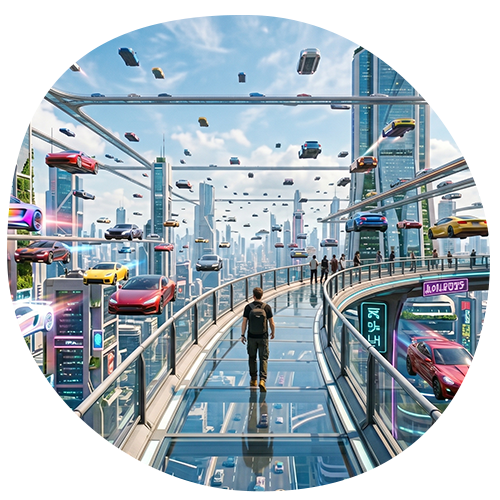
field sales rep of the future

Is the traditional field sales rep about to go the way of the fax machine?

As AI and automation reshape the workplace, sales teams are outsourcing their most repetitive tasks to digital tools. Inside sales and marketing, in particular, have seen an explosion of new tech. Now that anyone can spin up automated email sequences, cold call at scale, and scrape contact lists with a click, a critical question arises: is the traditional field representative becoming obsolete?

In this blog, we explore the shifting political and socioeconomic factors impacting the field sales industry, across fast-moving consumer goods (FMCG), consumer packaged goods (CPG), distribution, and manufacturing.

Alive and Well in the Spirits Industry 🍸

At BCB London 2026, we hit the floor with a burning question: Is field sales dead?

The consensus? Not even close. In fact, as AI handles more administrative tasks, the human touch has become more critical than ever, especially in an industry built entirely on relationships.

We visited the stands of some of our incredible partners, including Boutique Brands, Speciality Brands, Double Dutch Drinks, NXUS Drinks, Bennett Opie, and Proof Drinks. Speaking with everyone from CEOs to on-the-ground reps, we wanted to know exactly why their strategies still hinge on face-to-face field sales.

When it comes to spirits brands and agencies, the sheer nature of sampling, securing listings, and negotiating contracts means one thing is certain: the future of hospitality will always go hand-in-hand with the future of field sales.

What is the current threat?

With tightening operational budgets and softening global GDP growth dropping to 2.9% in 2025 and 2.6% in 2026, understanding the future of field sales is critical for commercial survival. Running an asset-heavy sales force feels like a recipe for margin leakage. Only about 1/3 of sales and marketing executives expect budget increases above 5%. Pair that with energy market volatility, driven by tensions in key supply corridors like the Strait of Hormuz, which controls nearly 20% of global oil distribution, and every unoptimised route starts to hurt.

Despite the doom-mongering, the rumours of the death of field sales are highly exaggerated

For consumer packaged goods (CPG) and fast-moving consumer goods (FMCG) brands, physical presence is not a legacy cost. It is your ultimate competitive advantage.

The future of field sales is not obsolete. It’s about removing human error from the human touch. We are moving the tedious, transactional admin to digital self-service, freeing up our physical teams to do what they do best: win on the ground.

To thrive, we need to split the transactional from the relational. Because at the end of the day, the physical venue is still where brands are won or lost.

The Retail and Hospitality Revolution: Winning the Floor and the Bar

While service sectors can happily migrate to Zoom, physical execution remains a contact sport.

FMCG and CPG brands operate on different cycles: Planned purchases versus high-velocity, rapid-turnover urgency. But they share one massive headache: brand loyalty is incredibly volatile.

But this is about much more than just supermarket shelves.

For brands operating in the on-trade and hospitality sectors (including pubs, bars, restaurants, hotels, and gyms) the physical venue is where your brand experience is built. You are not just competing for shelf space. You are competing for liquid on lips, securing the front-of-house draft tap, training bar staff on the perfect serve, and placing the eye-catching backbar display.

Since 2021, over 50% of British consumers have regularly switched brands if their go-to option was out of stock.

With average grocery store out-of-stock (OOS) rates hovering between 7-10%, availability completely overrides brand affinity. If a gym-goer can’t find their favourite protein shake, or a pub customer finds their preferred gin has run dry, they don’t wait. They switch instantly.

For independent convenience stores and busy hospitality managers, human relationships are the ultimate gatekeeper. You cannot secure prime shelf placement, negotiate tap takeovers, or protect listings via an email newsletter. It takes a rep walking through the door, building genuine rapport, and solving problems on the spot.

Look at how industry leaders are playing it:

Diageo

The beverage giant added over 100 specialised reps to move independent venue visits from a quarterly to a monthly rotation. They secured massive on-trade wins simply by prioritising the human touch.

Wholesale Automation

Platforms like Bowimi let reps capture revenue on the spot. Instead of waiting for a central team to process an order, reps dispatch digital “transfer orders” directly to wholesalers (like Booker or Bestway) from the venue floor. It closes supply chain gaps before the rep even leaves the premises.

The Future of Brewery Field Sales? 🍺

This time at BREW//LDN 2026, we asked breweries the same question, ‘Why is field sales still so important in a digital age?

As Cold Town Beer‘s rep, Catherine, told us: “No one wants to buy beer if they haven’t tried it.”

Relationship-building also came out as one of the biggest reasons field sales is still integral to brand’s strategies. Rather than a waste of time, when done efficiently and smartly, in-person selling has a direct impact on growth, brand presence, and selling in new products.

We caught up with Vocation Brewery, Cold Town Beer, Attic Brewco, Dusty’s, and CASK Liquid Marketing to why field sales stands the test of time.

The hunt for new accounts is tougher than ever, but the brands winning the game are the ones doubling down on the field and prioritising connections.

The Symbiosis: How Field Sales and Remote Teams Work Together

Multi-year sales planning is dead. Instead, we are looking at adaptive GTM models with shorter 6-8 month cycles.

As part of this shift, up to 80% of smaller, transactional accounts (SMEs) are migrating to inside sales. They contribute about half of overall revenue but don’t need expensive physical visits.

Inside reps can reach 4x more accounts daily at half the cost simply because they aren’t battling traffic. But this isn’t a replacement for the field force. It’s a partnership. Virtually contacting accounts does not equate to the same impact of your sales force on the ground, hunting opportunities and spotting compliance gaps.

An automated email sequence cannot pour a sample of a new craft rum for a bartender. A digital ad can’t check if your point-of-sale kit is gathering dust in a pub basement. A Zoom call won’t spot a competitor’s backdoor promotion or build rapport with a busy landlord on a Friday afternoon.

By migrating low-touch accounts to remote channels, you protect your margins. More importantly, you save your field reps for the 20% of strategic accounts that drive the other 50% of your revenue.

Smashing the "Rep-Free Journey" and the Trust Ceiling

A few years ago, a lot of companies bought into the myth of the “rep-free” buying journey. It turned out to be a fantasy.

Online portals are great for buying printer paper, but they hit a psychological trust ceiling when capital risk rises. No one negotiates a high-stakes distribution contract with a chatbot.

Buying committees now average 6.8 stakeholders, climbing past 13 for complex enterprise deals. This stakeholder bloat stalls decisions. You can’t solve internal client politics with a generic email flow. You solve it with empathy, negotiation, and a physical handshake.

Digital fatigue is real. By 2030, 75% of B2B buyers will actively prefer human interaction over AI during high-stakes decisions.

The goal isn’t to remove the human. It is to use technology to eliminate human error, like missed follow-ups or lost order notes, while keeping the human connection completely intact.

Supercharging the Rep (Instead of Replacing Them)

We aren’t trying to replace a rep’s intuition with an algorithm. We are supercharging their ability to execute.

Reps used to spend hours planning routes, typing up car notes, and chasing head office. It was a massive waste of talent. Modern field sales enablement platforms change the game entirely:
AI route optimisation drops daily mileage and carbon footprints by 15-25%. Reps spend less time driving and more time selling.

Reps log stock, take display photos, and record feedback in seconds on their mobiles, completely killing evening admin.

Chasing unrealistic targets is the quickest way to lose good reps. Data-led GTM strategies mean goals are grounded in reality rather than guesswork, allowing smart platforms to set achievable, fair targets that keep your team motivated and on the road.

Field Execution Impact
Interactive Framework

Field Execution Impact

See how shifting from legacy pen-and-paper tracking to a platform-enabled workflow directly transforms your on-trade and retail performance.

Legacy Way

Manual Execution

Reactive reordering, without tracking rate of sale or upsell opportunities.

Bowimi Way

Platform-Enabled Execution

Instant digital transfer orders sent directly from the venue floor.

Achieved Business Impact
Up to 20% improvement in SKU and stock availability.
Legacy Way

Manual Execution

Speculative pitching to new prospects, finding it difficult to track existing base and viable opportunities.

Bowimi Way

Platform-Enabled Execution

Real-time task, pipeline, listing type, and order tracking.

Achieved Business Impact
Maximum category share, protected listings, and secured tap handles.
Legacy Way

Manual Execution

Infrequent, manual pricing audits written down in paper notebooks.

Bowimi Way

Platform-Enabled Execution

Quick logging of promotions, surveys, as well as listings all in a mobile-friendly app.

Achieved Business Impact
Near-total compliance with national pricing and contract agreements.
Legacy Way

Manual Execution

Visual checks with no shared confirmation or tracking back to head office.

Bowimi Way

Platform-Enabled Execution

Instant photo capture and localised activation compliance tracking.

Achieved Business Impact
Guaranteed display execution and significantly higher campaign ROI.
Legacy Way

Manual Execution

No centralised recording of contacts, uncoordinated venue visits and territory management.

Bowimi Way

Platform-Enabled Execution

Record and manage contacts, and seamlessly guide conversations with surveys.

Achieved Business Impact
25% reduction in daily beat times and more time spent building real rapport.
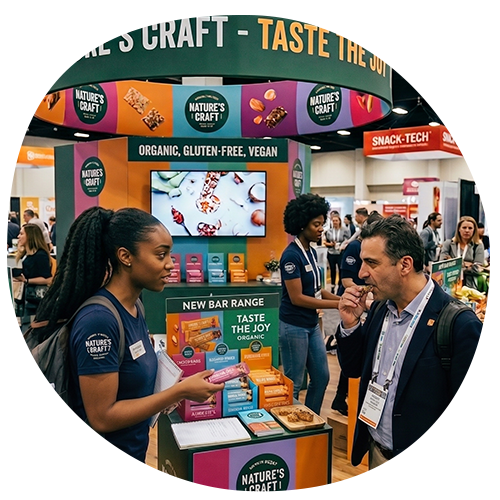
woman giving sample to prospect at trade show

Avoid the Reinvestment Paradox

Here’s the hard truth most software companies avoid.

Saving administrative time is pointless unless you redirect those hours into relationship building. If your reps save 5 hours a week just to write more emails from their kitchen tables, you’ve gained nothing.

Heads of Sales must actively reinvest saved administrative hours into face-to-face relationship building. Brands that do this are 2.2 times more likely to exceed their growth goals.

At Bowimi, we build tools that keep your reps out of spreadsheets and on the streets. We’re mobile-first, and with a 4.9 Trustpilot score and 4.7 stars on G2, they actually enjoy using our platform!

G2 Summer 2026 High Performer Badges

The future of field sales isn’t digital-only. It is human-first, enabled by smart tech. Let’s make sure our reps have the tools to do what they do best: talk to people, build brands, and win the ground game.

G'day!

It seems you're visiting from Australia.

Want to redirect to our Australian site?